
Pelvic Floor Health for Women and Men: The Most Overlooked Muscle Group in Primary Care
A clinical guide to the muscles that affect bladder control, sexual function, low-back pain, and core stability — and why so few patients ever get them assessed.
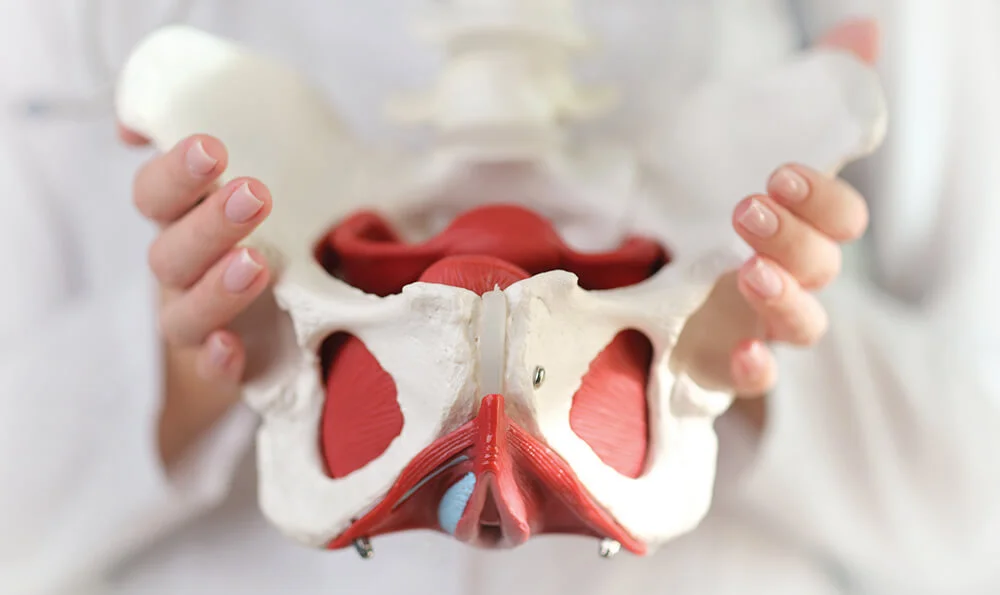
The pelvic floor is a hammock of muscle, fascia, and connective tissue that runs from the pubic bone to the tailbone, supporting the bladder, bowel, and — in women — the uterus. It is involved in continence, sexual function, breathing mechanics, lumbar stability, and intra-abdominal pressure regulation. It works hundreds of times a day. And in primary care, it almost never gets discussed unless a patient brings it up first.
The cost of that silence is measurable. Research suggests roughly one in three Canadian women experiences urinary incontinence at some point, with rates climbing after childbirth and through menopause. Men are not exempt — chronic pelvic pain, post-prostatectomy incontinence, and erectile function all involve pelvic floor mechanics. Patients commonly normalize symptoms as an inevitable cost of aging or childbirth. They aren’t. Most pelvic floor dysfunction responds well to targeted physiotherapy, and the patients who get assessed tend to wonder why nobody mentioned it a decade earlier.
What the pelvic floor actually does
The muscles of the pelvic floor have four jobs. They support the pelvic organs against gravity and intra-abdominal pressure. They contribute to continence by maintaining tone around the urethra and anus. They participate in sexual function — arousal, sensation, and orgasm all involve pelvic-floor coordination. And they form one wall of the deep core canister, working with the diaphragm above, transverse abdominis around the front and sides, and multifidus behind.
When the pelvic floor functions well, none of this is conscious. When it doesn’t, the symptoms range from mildly inconvenient to severely disabling: stress incontinence with coughing or running, urge incontinence and frequent bathroom trips, pelvic organ prolapse, pain with intercourse, chronic low-back or hip pain that resists standard treatment, constipation that does not respond to fibre, and in men, erectile dysfunction or post-void dribble.
What surprises most patients is how often pelvic floor dysfunction is hypertonic — too tight — rather than weak. A pelvic floor that cannot fully relax produces pain, urgency, and difficulty emptying the bladder or bowel. Kegels make it worse. Without an assessment, patients often spend years doing the wrong exercise for their condition.
Why this gets missed in standard primary care
A nine-minute family-doctor visit is not built for pelvic floor assessment. The exam requires training that most general practitioners do not have, takes thirty to sixty minutes, and involves an internal palpation that patients are unlikely to ask for if it has never been offered. The result is a pattern where symptoms are managed pharmaceutically — bladder medications, pain medications — without anyone examining the muscles themselves.
The other reason is cultural. Patients don’t volunteer symptoms they have been told are normal. A woman who leaks urine when she sneezes after two pregnancies has heard it framed as expected. A man with pelvic pain has often been told it is prostatitis and prescribed antibiotics that don’t help. Neither is examined by a pelvic-floor physiotherapist, who would identify the muscular dysfunction in one visit.
What an assessment involves
A pelvic-floor physiotherapy assessment starts with a detailed history — bladder and bowel patterns, sexual function, pregnancy and surgical history, current symptoms — followed by an external examination of posture, breathing pattern, abdominal wall function, and the lumbar and hip regions that surround the pelvis.
The internal exam, with patient consent, evaluates muscle tone, strength, endurance, coordination, and the presence of trigger points or scar tissue. The physiotherapist assesses whether the patient can contract the muscles correctly, relax them fully, and coordinate the contraction with breathing. Most patients have never had this assessment, and most are surprised by what it reveals — many find they have been recruiting the wrong muscles entirely.
From there, the plan is specific. A weak, deconditioned pelvic floor needs progressive strengthening. A hypertonic floor needs down-training, breathing work, and sometimes manual release of trigger points. A coordination problem needs neuromuscular retraining. The plan that fits one patient is wrong for another, which is why generic Kegel handouts produce inconsistent results.
Common presentations in women
Stress urinary incontinence — leaking with coughing, sneezing, jumping, or running — is the most common presentation in women. It is strongly responsive to pelvic floor rehabilitation, with research indicating 70 to 80 percent of patients achieve significant improvement or resolution after twelve weeks of targeted physiotherapy.
Postpartum recovery is another major category. Diastasis recti, perineal scarring, weakened core function, and altered breathing patterns are common after vaginal or cesarean birth, and the standard six-week checkup rarely addresses them in any depth. A pelvic-floor physiotherapy assessment between six and twelve weeks postpartum identifies what needs work and what is healing normally.
Perimenopause and menopause bring a second wave. Declining estrogen affects tissue elasticity, and symptoms that were manageable in the thirties become disruptive in the fifties. Pelvic organ prolapse, sudden onset incontinence, and pain with intercourse all become more common, and all respond to a combination of physiotherapy, medical management, and lifestyle adjustment.
Common presentations in men
Men’s pelvic floor health gets even less clinical attention, but the same muscle group affects men in distinct ways.
- Post-prostatectomy incontinence. Pelvic floor physiotherapy before and after prostate surgery substantially shortens recovery time. Patients who start pre-surgery do better than those who wait until incontinence is established.
- Chronic pelvic pain syndrome. Often misdiagnosed as chronic prostatitis, this is frequently a hypertonic pelvic floor with trigger points and altered breathing mechanics. Antibiotics do nothing. Manual therapy and down-training help most patients.
- Erectile dysfunction with a muscular component. Pelvic floor strength influences erectile function. For a subset of patients — particularly younger men with no vascular risk factors — pelvic-floor work produces meaningful improvement.
- Post-void dribble and weak stream. Often a pelvic-floor coordination issue rather than a prostate problem, and responsive to targeted rehabilitation.
Men typically arrive at pelvic floor physiotherapy years later than women, often after multiple failed treatments. Earlier referral changes outcomes substantially.
How integrated care changes the plan
Pelvic floor dysfunction rarely sits in isolation. A patient with chronic pelvic pain often has lumbar dysfunction, hip mobility restrictions, and anxiety amplifying the pain experience. A postpartum patient may have nutritional deficiencies, sleep deprivation, and mood changes interacting with the physical recovery. A man with chronic pelvic pain frequently has work stress driving baseline muscle tension.
In a multidisciplinary setting, the pelvic-floor physiotherapist works alongside a family physician for medical workup, a chiropractor or osteopath for adjacent joint dysfunction, a registered dietitian for the bladder and bowel pieces, and sometimes a psychologist when chronic pain has produced its predictable mental-health load. The combination produces better outcomes than any single discipline, and shared charting prevents the patient from repeating their history five times. Patients who suspect pelvic floor involvement should speak with a pelvic floor physiotherapist in Calgary rather than continuing to manage symptoms alone.
Bladder and bowel habits that affect outcomes
Daily habits shape pelvic floor function more than most patients realize, and a few common patterns work against recovery. Hovering over public toilets, holding urine for long stretches during a busy workday, and straining during bowel movements all train the pelvic floor in unhelpful directions. Over months and years, these patterns contribute to the dysfunction that brings patients to clinic.
Adequate fluid intake matters, but timing matters too. Patients with urgency or nocturia often benefit from front-loading their fluid intake earlier in the day and reducing intake in the two to three hours before bed. Bladder irritants — caffeine, carbonated drinks, artificial sweeteners, alcohol, and acidic foods for some patients — affect symptom severity. A pelvic floor physiotherapist or registered dietitian can walk a patient through which to adjust and in what order.
Bowel patterns are equally important. Chronic constipation places sustained downward pressure on the pelvic floor, contributing to prolapse risk over time. Fibre, hydration, and positioning during defecation — a small footstool to mimic squatting position — make a measurable difference. Patients who address these everyday habits in parallel with the in-clinic rehabilitation tend to see faster, more durable change than patients relying on appointments alone.
The case for an assessment
The pelvic floor is the muscle group most likely to be quietly dysfunctional in adults over forty, and the least likely to be assessed in standard primary care. Symptoms that patients dismiss as normal — minor leakage, occasional pelvic pain, sexual dysfunction, persistent low-back pain — are often muscular and treatable. A single assessment by a pelvic-floor-trained physiotherapist clarifies whether the muscles are part of the picture.
The treatment, when indicated, is unglamorous: targeted exercises, breathing work, manual therapy, and time. The results are often striking. Patients consult a qualified clinician for symptoms that have persisted more than a few months, especially when standard treatment has not produced improvement.
About the author — this article was contributed by the team at Primaris Health, a Calgary multidisciplinary clinic with pelvic floor physiotherapy, family medicine, and integrated rehabilitation under one roof. The clinic sees pre- and postpartum patients, perimenopausal women, and men with pelvic pain or post-prostatectomy needs.